New: IoT monitoring
Sensors that turn into
tickets, alerts and evidence.
Alongside connecting your business software, Autovibe now builds IoT monitoring: small, purpose-built sensor networks that watch for the specific things landlords and small businesses currently find out about too late — and feed straight into an automated ticket, alert or notification instead of a surprise.
Where we’re starting
Two problems, both underserved today.
01 · Property managers, landlords and body corporates across NZ & Australia
Property & Rental Monitoring
Sensor data property managers can act on before it becomes a claim.
Leaks, damp and unsafe air usually surface as a tenant complaint, a repair bill or a compliance failure — not before. By the time anyone finds out, the cheapest moment to fix it has already passed.
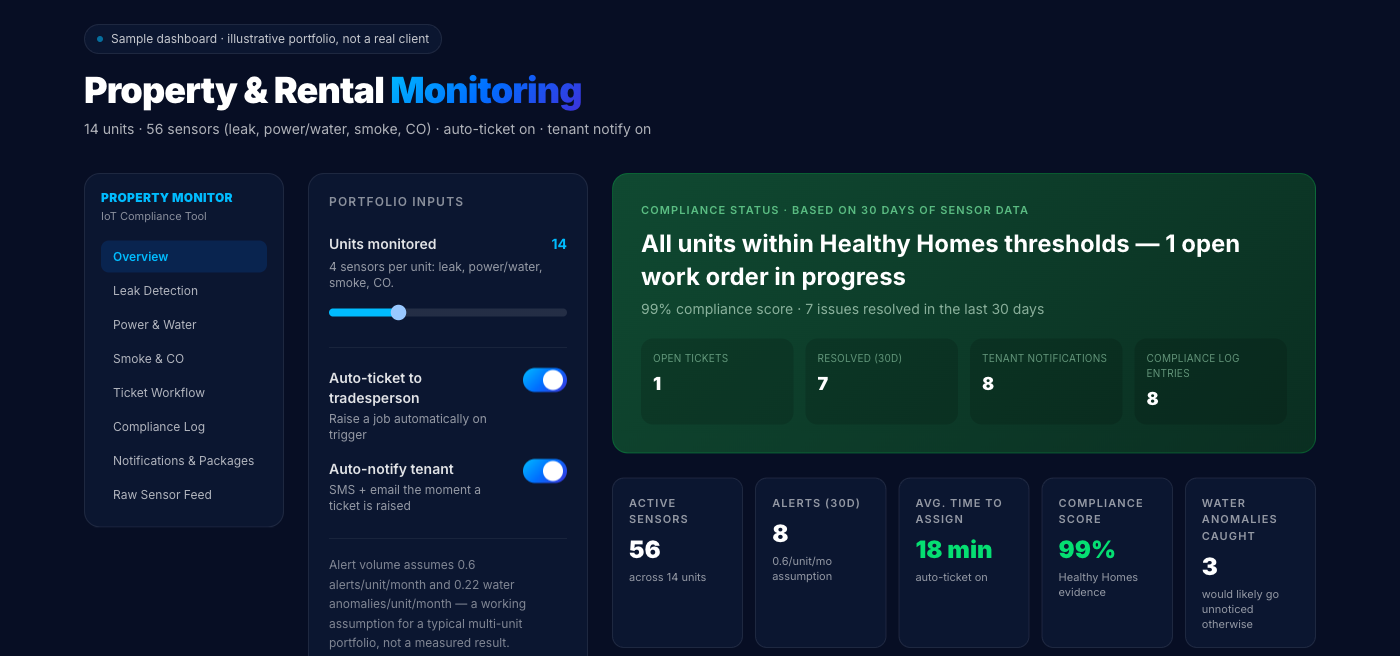
Leak detection
Under-sink, laundry and floor sensors catch a slow leak before it reaches the ceiling below.
Power & water usage anomalies
A flatline, a spike, or usage while a unit is meant to be vacant flags itself automatically.
Smoke & CO monitoring
Continuous readings and battery status, not a once-a-year inspection form.
Detect → act, automatically
- 1Sensor reading crosses a set threshold
- 2A ticket is raised automatically to the assigned tradesperson
- 3The tenant is notified with what is happening and what to expect
- 4The resolution is logged as compliance evidence, timestamped
Why landlords are moving on this now
NZ’s Healthy Homes Standards and Australia’s minimum rental standards are pushing landlords toward exactly this kind of monitoring for compliance evidence — not a annual form filled in from memory, but a timestamped log a sensor actually produced.
02 · SMEs and landlords who already have solar and battery installed
Energy, Solar & Battery Monitoring
Visibility into solar and battery systems that most owners currently get none of.
A large number of NZ/AU small businesses and landlords now have solar and battery systems with close to zero visibility into how they are actually performing — most people accept whatever the inverter’s own dashboard happens to show them.
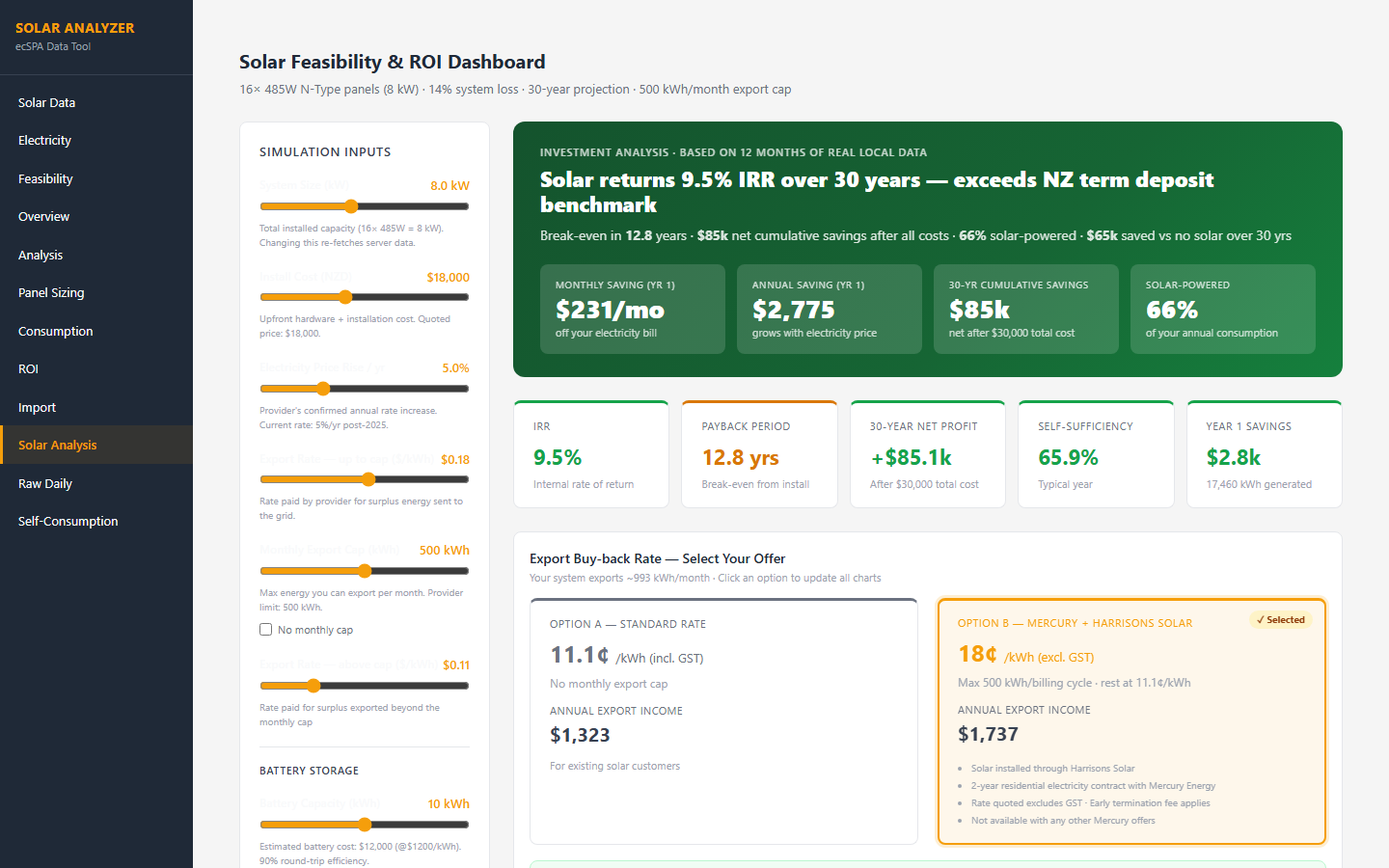
Inverter & BMS data
Pulled directly from the inverter and battery-management-system APIs into one place, instead of a separate app per device.
State-of-charge thresholds
An alert before the battery is run outside the range it was designed for.
Grid-draw-despite-solar issues
The exact kind of misconfiguration that quietly costs money every day it goes unnoticed.
Detect → act, automatically
- 1Inverter/BMS data streams in on a schedule
- 2Readings are checked against expected ranges for that time of day
- 3A misconfiguration or fault triggers an alert, not a support ticket weeks later
- 4Trend data builds up so a slow decline shows up before it becomes a failure
Why this is underserved
Most solar-plus-battery owners only find out something was wrong months later, from a higher bill. A lightweight monitoring and alerting layer on top of hardware they already own is a real, underserved product rather than another app to sell alongside a new install.
Have a property portfolio or a solar system
you’d like actual visibility into?
Tell us what you’re running — how many units, what hardware, what you’re currently flying blind on — and we’ll scope what a monitoring layer would actually look like for it.